4.8
Save 6%

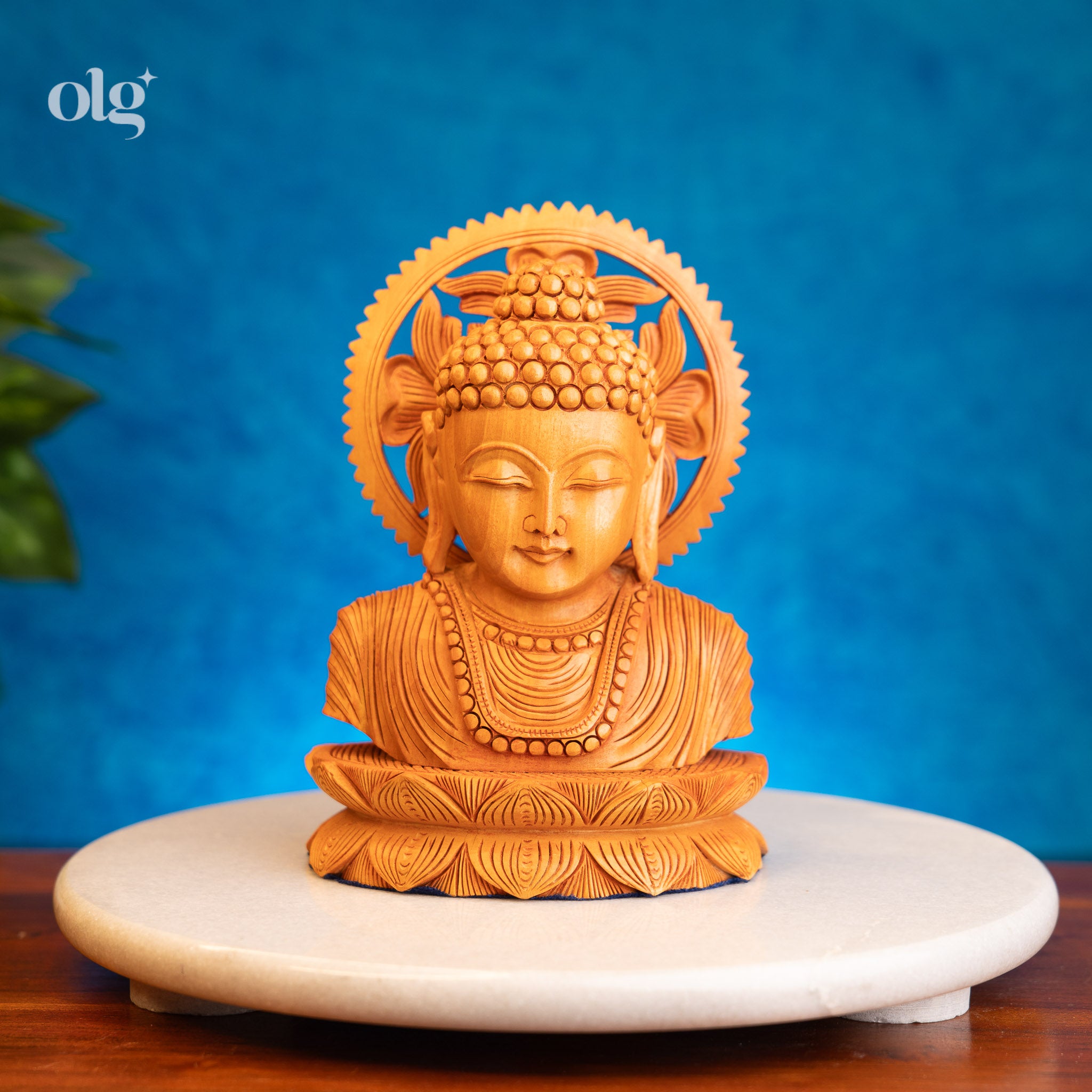
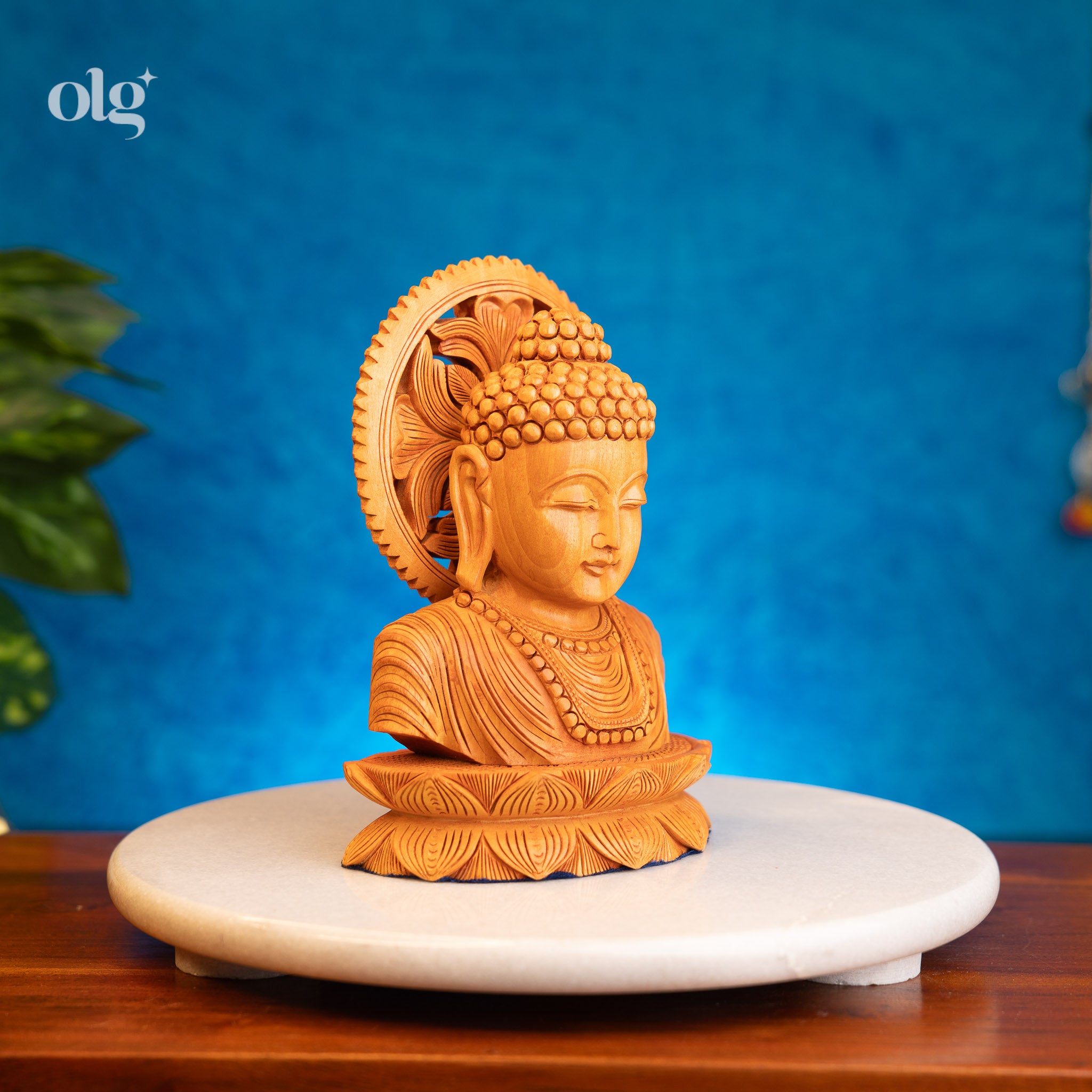
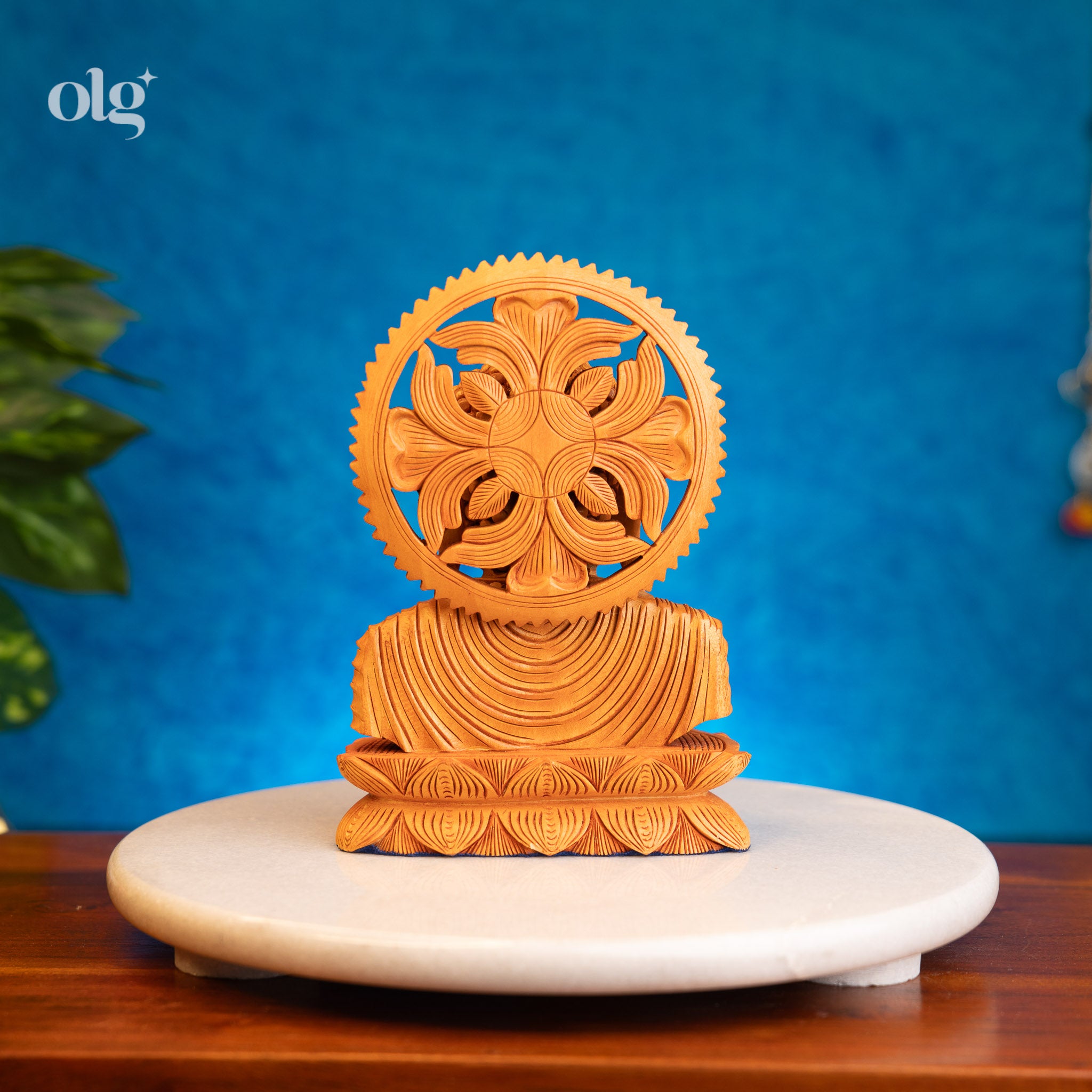
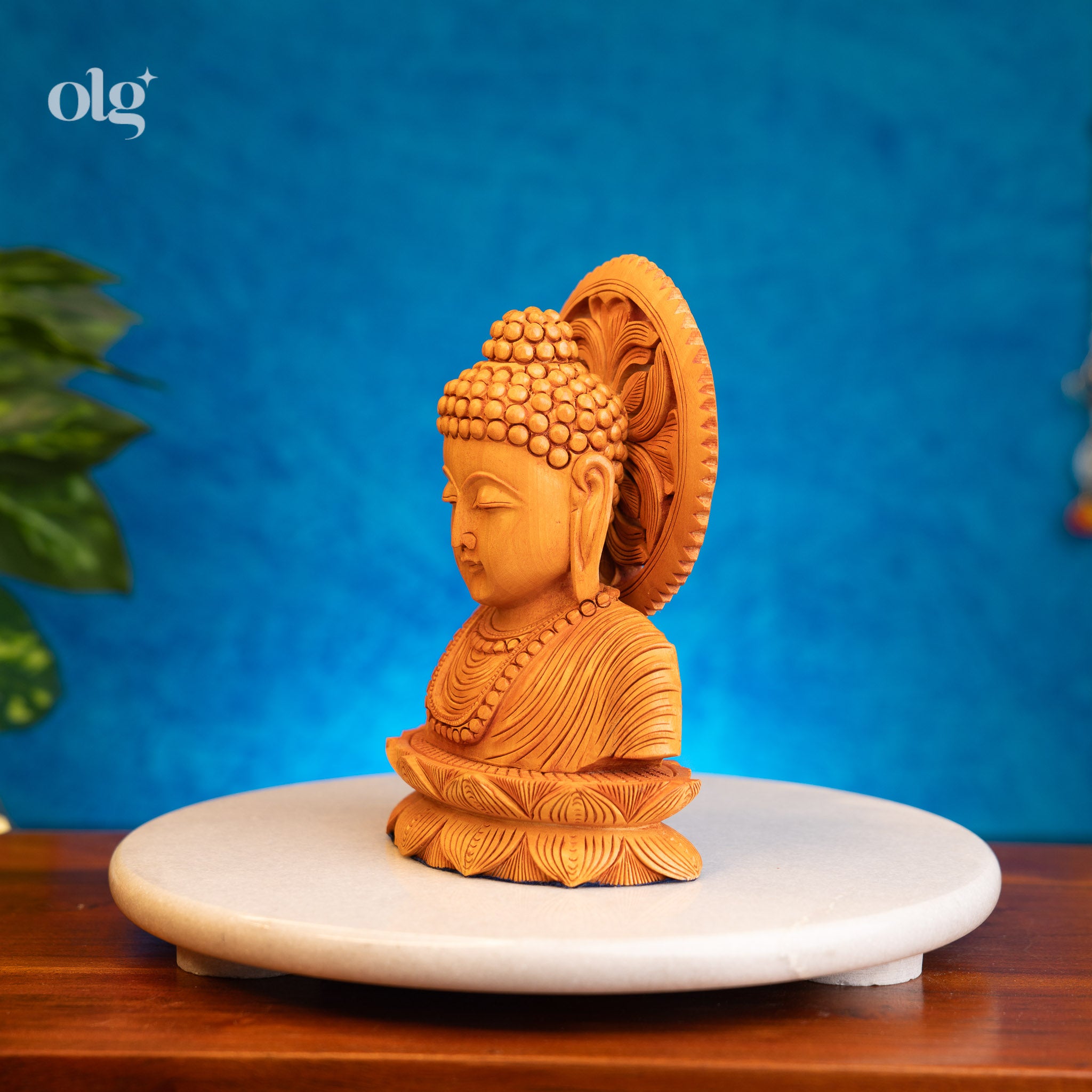
Hand Carved Wooden Buddha Bust with Halo

Sale price₹ 4,999.00Regular price ₹ 5,318.09
Save 7%

Wooden Meditating Buddha Abhaya Mudra Figurine on Lotus Base
Sale price₹ 2,499.00Regular price ₹ 2,687.10
Save 8%

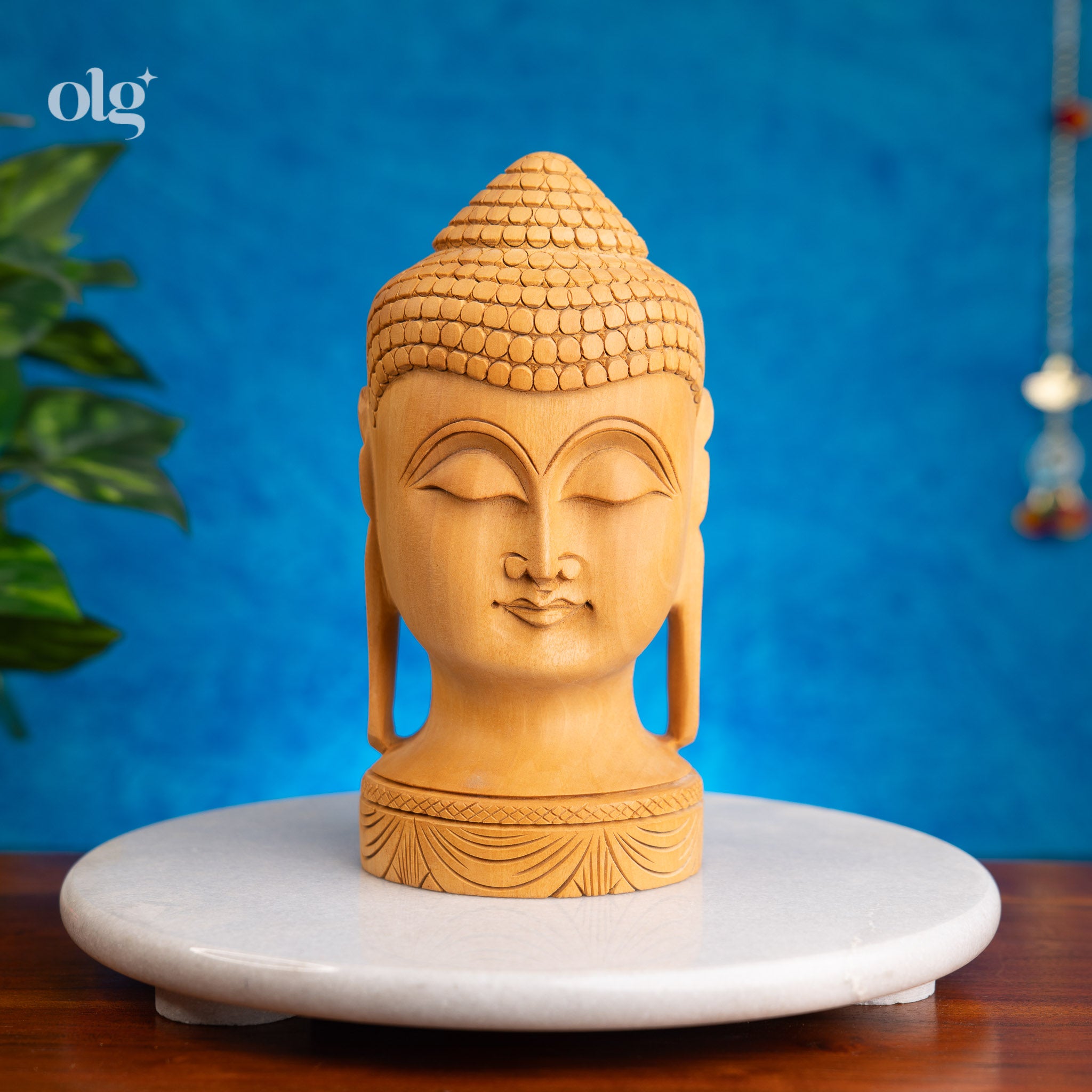
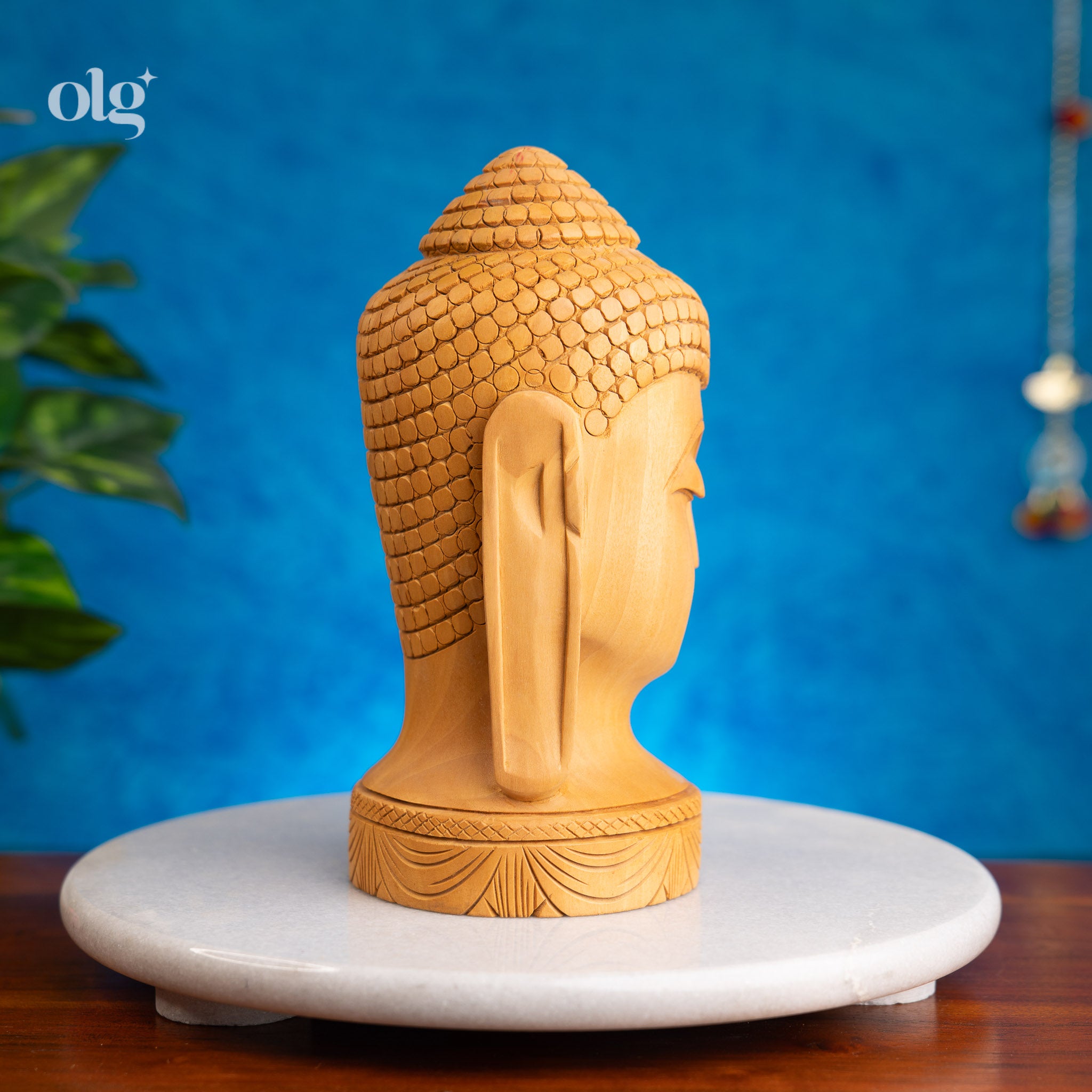
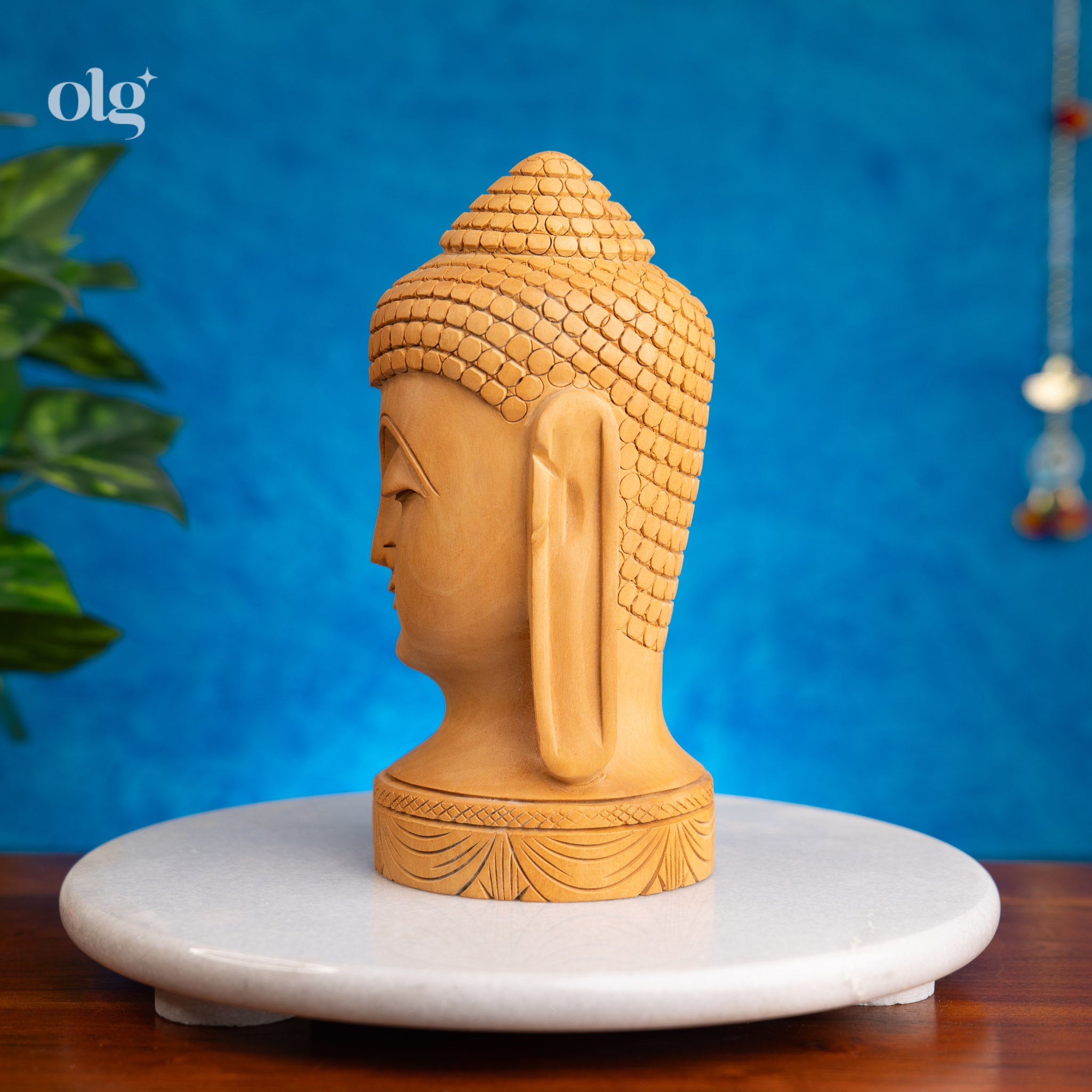
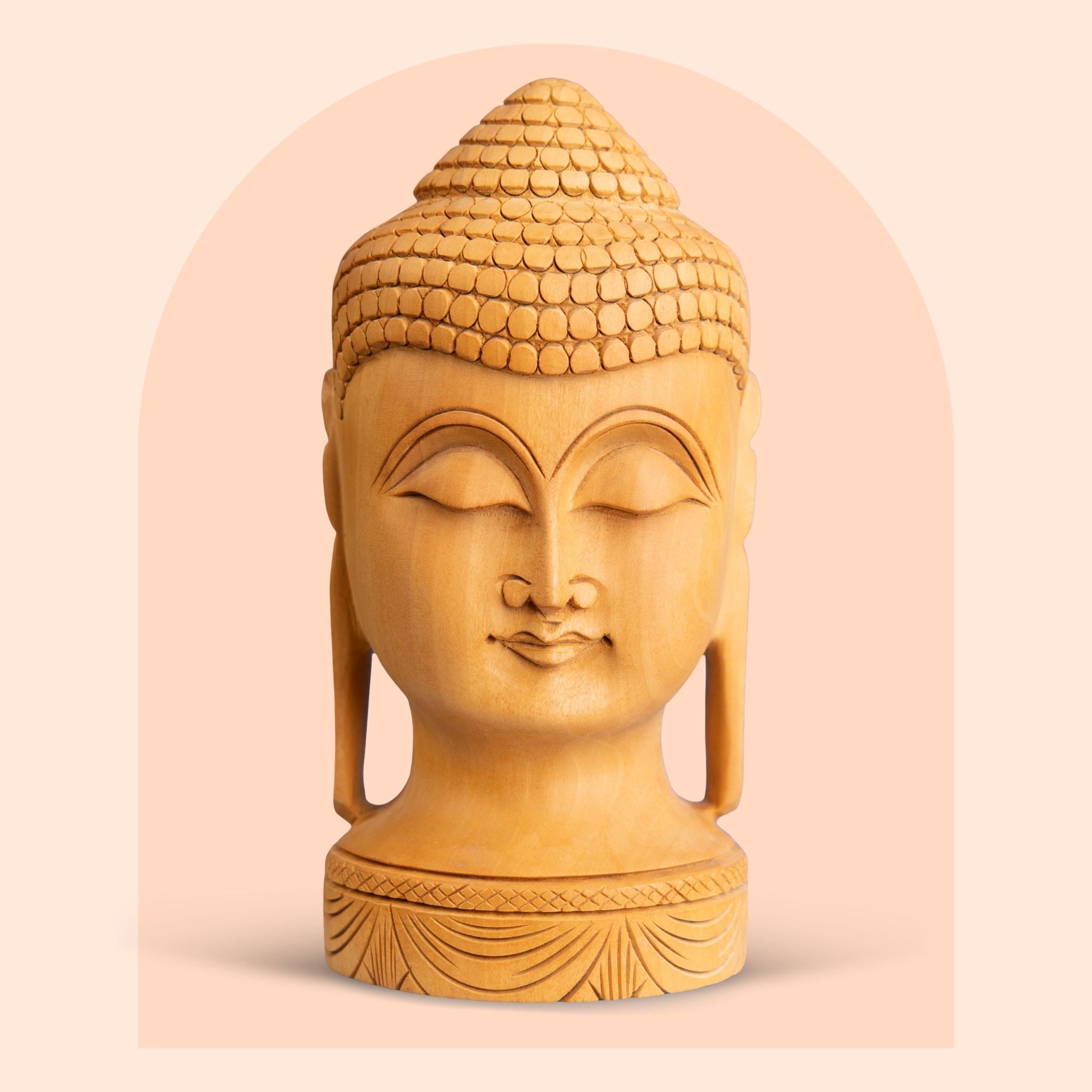
Meditating Wooden Buddha Head Figurine (8 Inch)
Sale price₹ 2,125.00Regular price ₹ 2,309.78
Save 10%

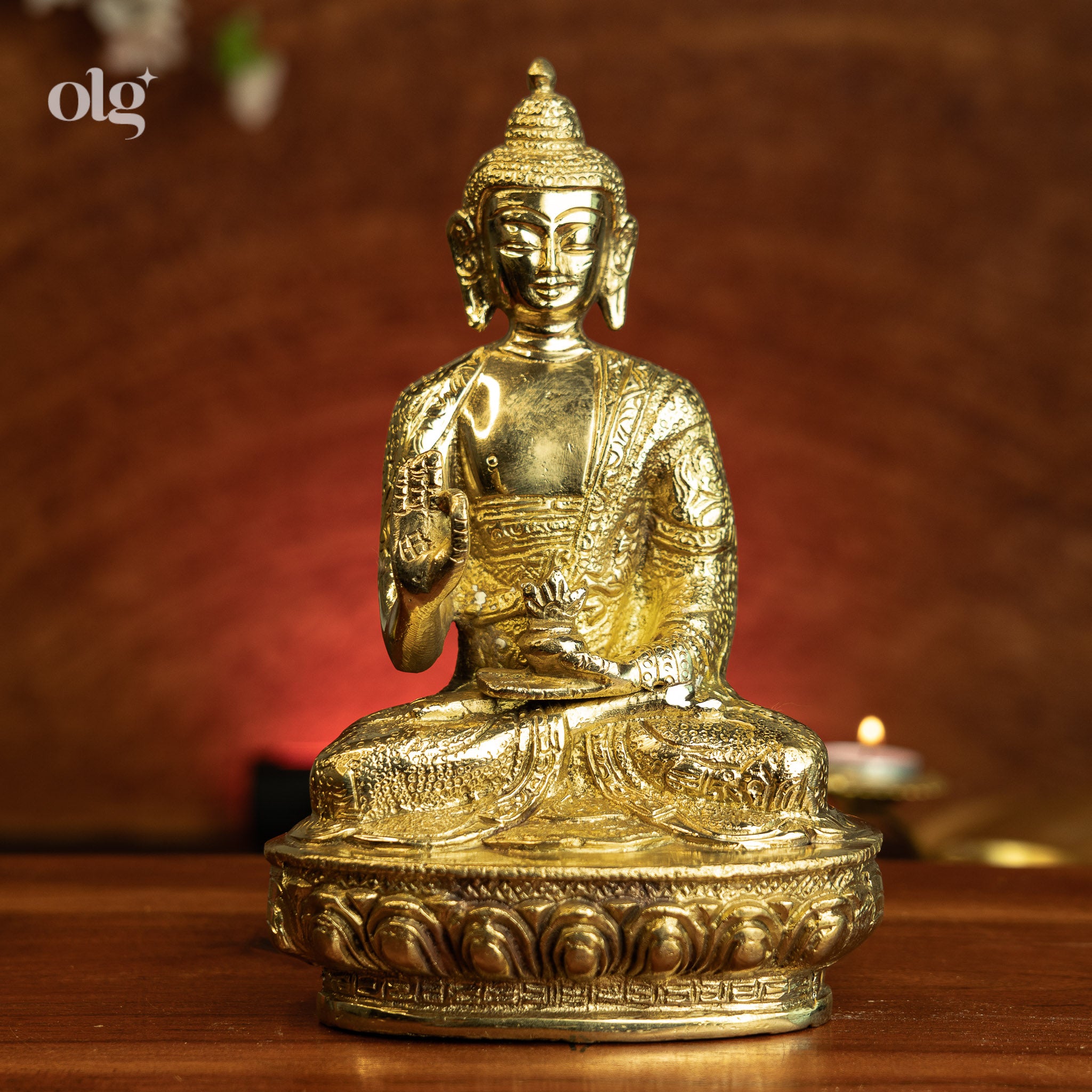
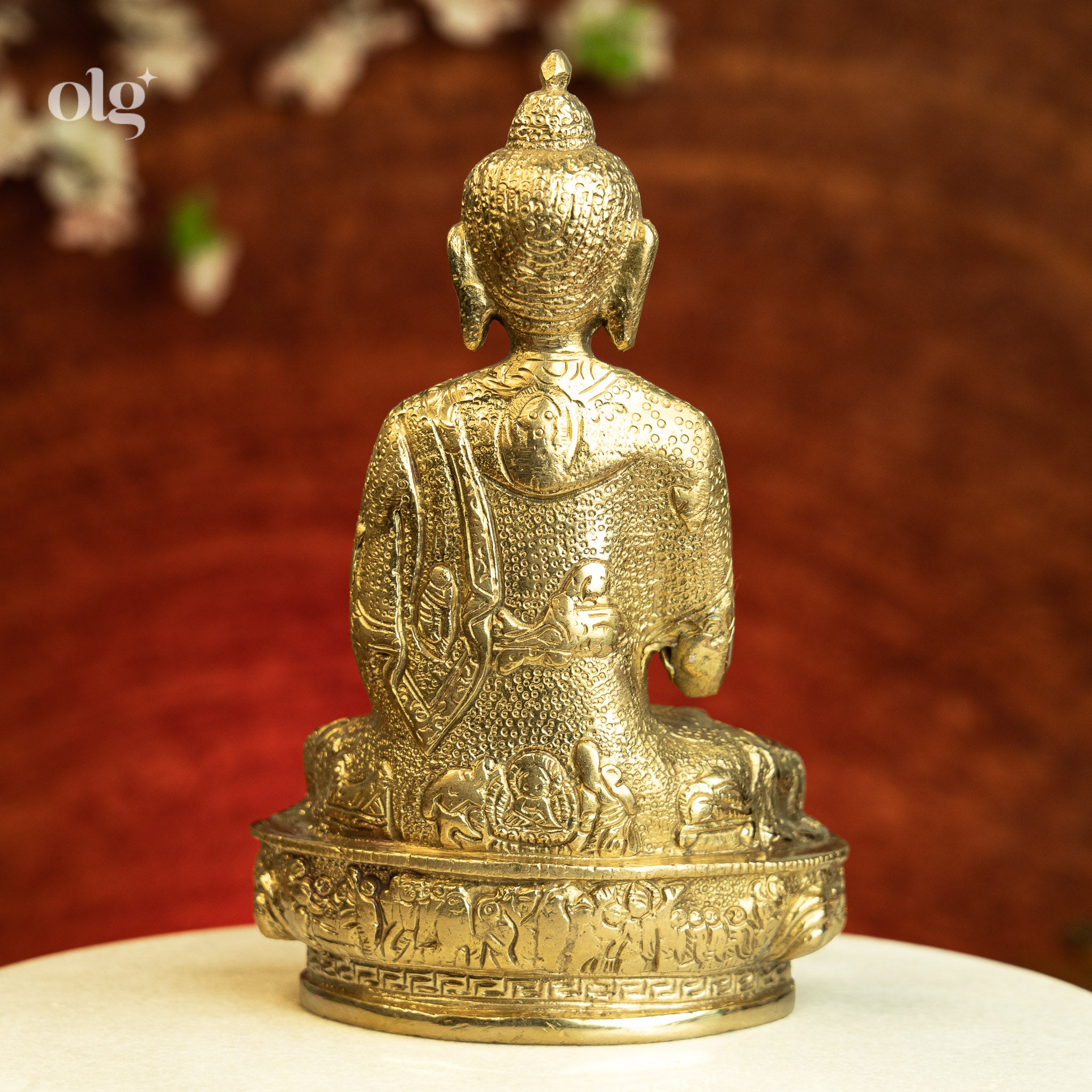
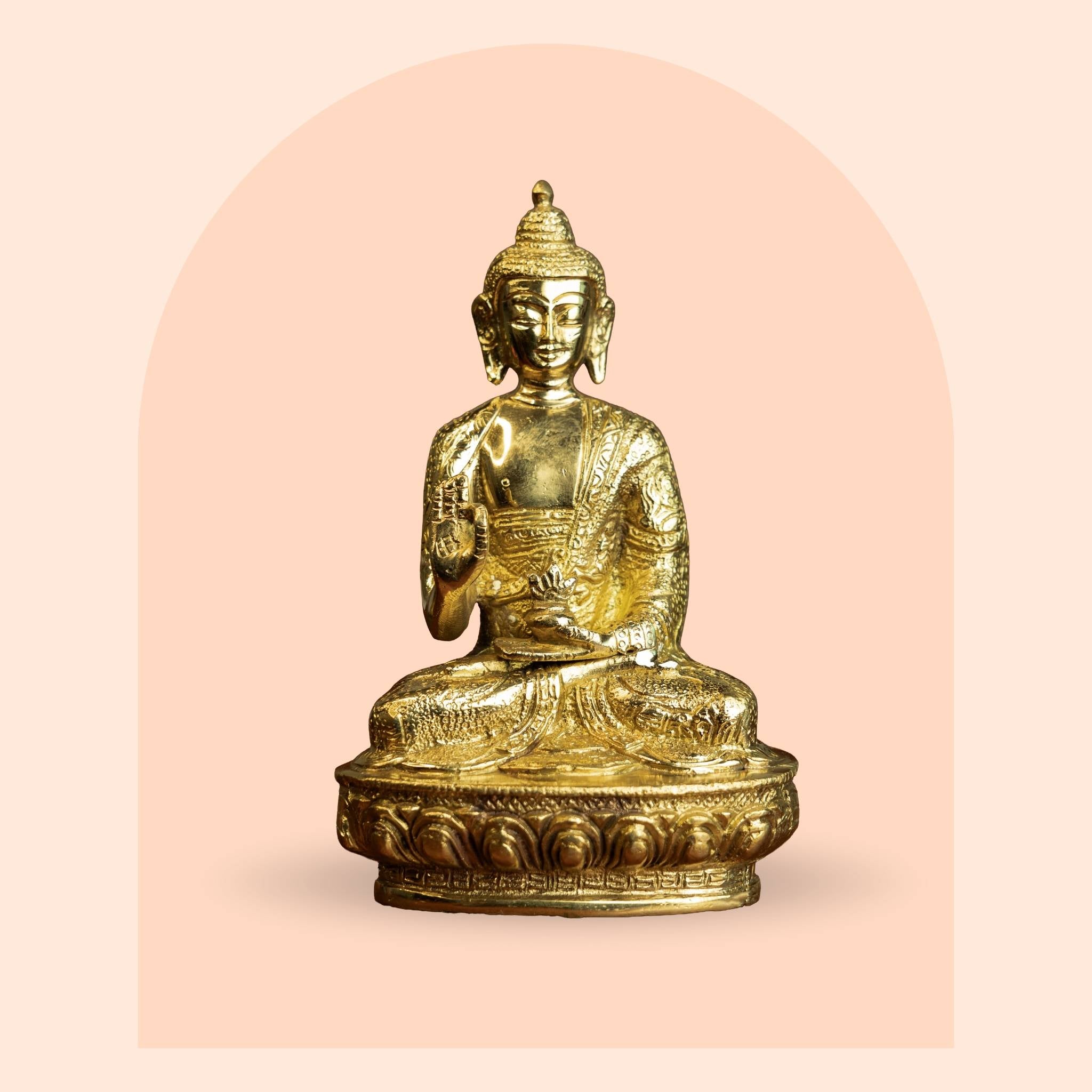
Brass Blessing Buddha Statue | Lotus Base

Sale price₹ 3,499.00Regular price ₹ 3,887.78

A Short Guide

Choosing from our Buddha Idols

Buddha idols for the home come in three main forms, and each sets a different mood: the meditating Buddha (dhyana) for calm, the blessing Buddha with raised palm (abhaya) for protection and fearlessness, and the Buddha head or bust as a contemplative art piece. Ours are hand-carved in wood or cast in brass by Indian artisans — from an 8-inch carved head to a brass blessing Buddha on a lotus base.

Wood reads warm and organic, ideal for living rooms and reading corners; brass catches light and suits altar or console settings. Keep any Buddha elevated — a table, shelf or dedicated stand — and give it breathing room: one Buddha in a calm corner does more than three competing for attention.

Sizing and where it works

Most pieces here run 6 to 9 inches — substantial enough to anchor a shelf, small enough for an apartment console. Unlike deity idols meant for worship, a decorative Buddha is fine in a bedroom or study; it doesn't carry the same placement restrictions as a murti kept for daily puja.

A design convention worth knowing

One honest note: a Buddha head or bust, sold on its own, is a modern decorative convention rather than a traditional devotional form — in Buddhist practice the complete figure is what's venerated, and many antique heads in circulation were originally fragments broken from larger statues. Ours are made as sculpture from the start, not salvaged pieces, and we sell them as décor rather than religious objects.

Questions, Carefully Answered

Frequently asked questions

Which direction should a Buddha statue face at home?
Place the Buddha facing east — the direction he faced at enlightenment — or facing into the room from an east or northeast wall. Keep it elevated on a table or shelf, never directly on the floor, and never in a bathroom.
Is it okay to gift a Buddha idol?
Yes — a Buddha is one of the safest cross-cultural gifts, symbolising peace rather than any specific ritual practice. It suits housewarmings, retirements and meditation-minded friends of any faith.
Wooden or brass Buddha — which should I choose?
Wood reads warm and organic, ideal for living rooms and reading corners; brass catches light and suits altar or console settings. Wood needs only dry dusting; brass can be polished to taste or left to patina.
Do I need to be Buddhist to keep a Buddha statue?
No — most people who buy one in India aren't Buddhist. It's kept for the calm of the form rather than as an object of worship, which is exactly why it works in a living room or office where a Hindu deity idol might feel out of place.
Is a Buddha head or bust disrespectful?
Reasonable people disagree here. In traditional Buddhist practice the full figure is what's venerated, and a head-only display is a modern decorative convention, not an ancient one. We treat ours as sculpture rather than a religious object, and would rather say that plainly than dress it up.
How many Buddha statues should I keep in one room?
One, generally. The point of a Buddha in a room is to be a still, singular focus — three competing for attention on the same shelf undercuts that. If you're building a collection, spread them across rooms.
Can antique-finish Buddha pieces be cleaned the same way as brass?
No — the darkened surface on antique-finish pieces is a deliberate treatment, not tarnish, and cleaning agents strip it. Dry dusting only; save polish for plain brass pieces that aren't antique-finished.