
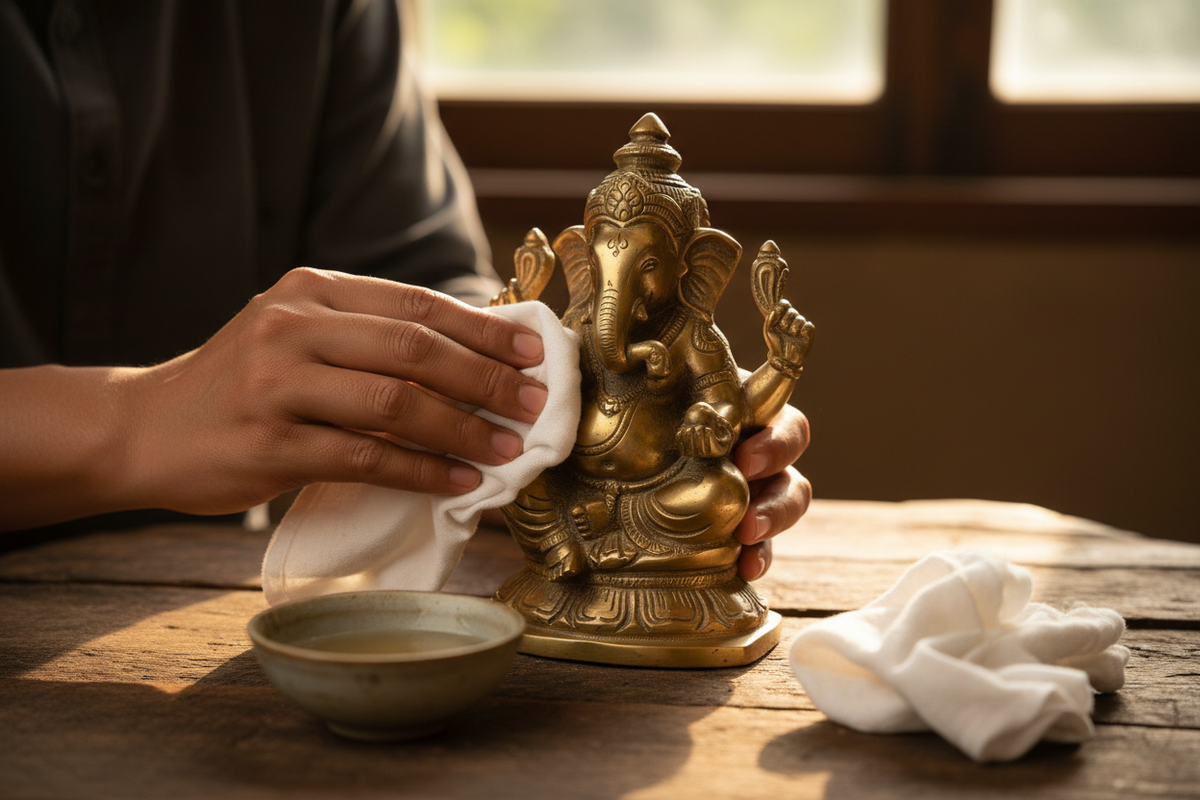
Short answer: rub the idol with a paste of lemon juice and salt, or with soaked tamarind pulp, work the detailed areas with a soft toothbrush, rinse briefly in warm water and — this is the step everyone skips — dry it completely with a cloth. Deep clean once a week at most. Between cleans, a dry cotton wipe is all a brass idol needs.
The one exception matters: never use lemon, tamarind or metal polish on an antique-finish idol. That dark surface is a patina applied deliberately, and acid strips it rather than cleans it. Antique-finish and lacquered pieces get dry dusting only.
Why brass darkens in the first place
Brass is an alloy of copper and zinc, and copper reacts with oxygen and moisture in the air to form a dark surface oxide. In an Indian home this is accelerated by exactly the things a worshipped idol is exposed to: kumkum, turmeric, ghee, flower water and the oils on our hands.
What matters is that this is surface oxidation, not corrosion. The metal underneath is completely unaffected. A darkened idol is not a damaged idol, and many people prefer the aged look and never polish at all. Whether you clean it is an aesthetic decision, not a maintenance obligation.
The three methods that work
1. Lemon and salt
Cut a lemon in half, dip the cut face in table salt, and rub it directly over the brass. The citric acid dissolves the oxide while the salt provides mild abrasion. For detailed areas — the folds of a garment, the curve of a trunk — make a paste of lemon juice and salt and work it in with a soft toothbrush. Rinse in warm water, then dry thoroughly.
2. Tamarind pulp
The traditional South Indian method, and gentler than lemon. Soak a lump of tamarind in warm water until soft, then rub the pulp over the surface. It is mildly acidic and slightly fibrous, which suits pieces with fine detail you don't want to scrub hard. Same finish: rinse, dry completely.
3. Pitambari powder
The purpose-made option, stocked by every Indian grocery. Make a paste with water, apply, leave for a minute, rinse and dry. It is the fastest of the three and the one most families reach for before festivals.
Drying is the step that actually matters
If your idol looks dull again a week after cleaning, water spotting is almost certainly why. Mineral deposits left behind by evaporating water sit on the surface and cloud it.
After rinsing, dry the piece completely with a soft cotton cloth, paying attention to crevices where water pools — between fingers, beneath a lotus base, inside a bell. Some people finish with a hairdryer on cool for heavily detailed pieces. This single habit does more for the appearance of brass than any choice of cleaning agent.
How often is too often
Weekly at the absolute most, and less if you can live with a little warmth in the colour.
Lemon, tamarind and polish are all mildly abrasive. Used repeatedly, they slowly erode the fine detail on a cast idol — the definition of a face, the edge of a carved ornament. That erosion is permanent. A well-kept 40-year-old brass murti is usually one that was dusted often and deep-cleaned rarely.
What never to use
- Steel wool or scouring pads — they leave permanent scratches that no polish removes.
- Harsh chemical cleaners and bleach — they can pit the surface and damage any lacquer.
- Acidic cleaners on antique-finish pieces — the patina is the finish. Stripping it patchily is much harder to fix than leaving it alone.
- Anything wet on painted or gold-plated pieces — dry dusting only; water lifts hand-painted work and plating cannot be re-polished.
Cleaning idols that are actively worshipped
If the murti receives abhishek, it is already being washed regularly, which is precisely why brass is the traditional metal for worshipped idols — it tolerates milk, water, kumkum and turmeric without degrading. Two habits keep it looking well: dry it after every abhishek rather than letting it air-dry, and give it a proper clean before major festivals rather than on a fixed weekly schedule.
Many families clean the mandir idols before Diwali, Ganesh Chaturthi and Navratri and simply dust in between. That rhythm is both traditional and, as it happens, exactly what the metal wants.
Quick reference
- Daily: dry cotton or microfibre wipe
- Monthly or pre-festival: lemon and salt, tamarind pulp, or pitambari — then dry completely
- Antique finish, lacquered, painted or plated: dry dusting only, no exceptions
- After abhishek: always dry the piece rather than leaving it wet
See our full range of solid brass idols, handcrafted by artisan families across India — or read about Vastu and Feng Shui pieces for placement guidance.
Share:
Which Direction Should a Buddha Idol Face at Home? A Practical Vastu Guide
Where to Keep a Lakshmi Idol at Home for Prosperity