
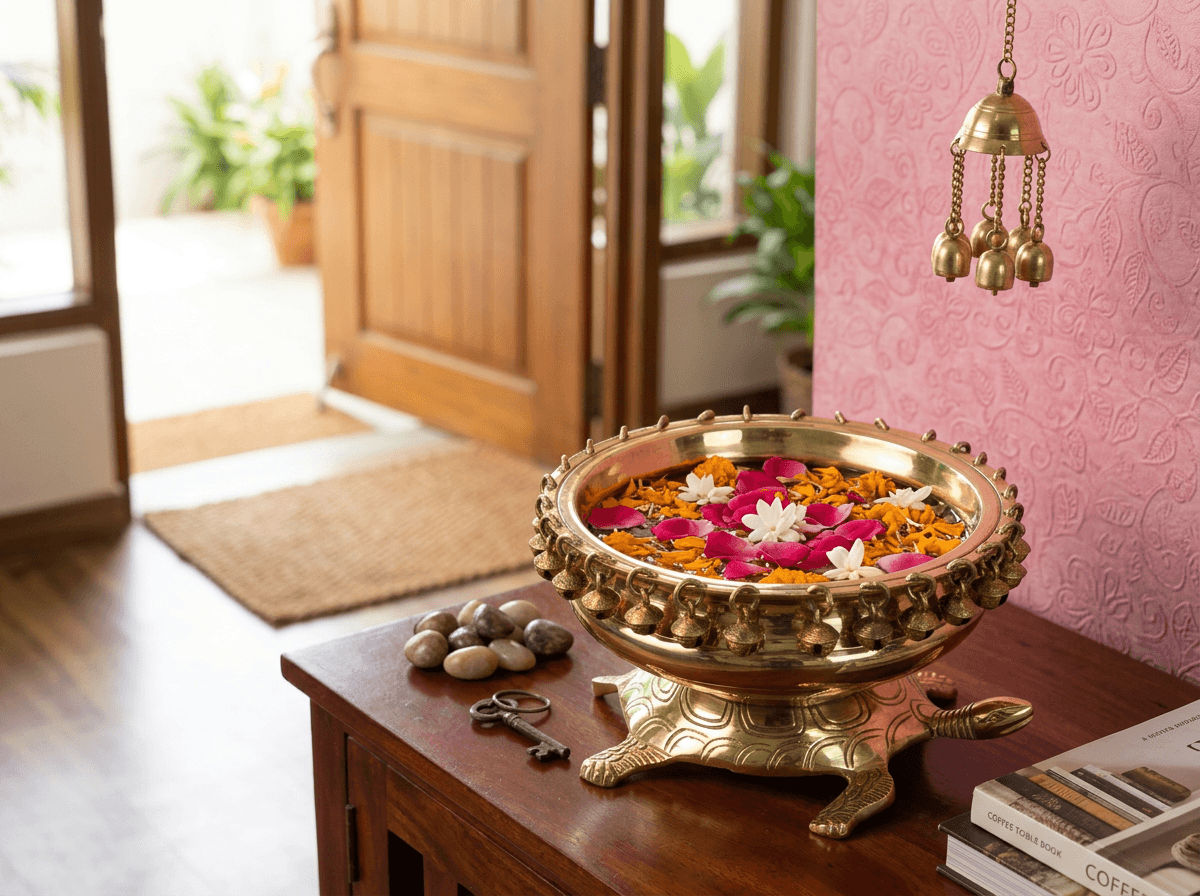
Short answer: the traditional Indian entrance set is a pair of elephants with trunks raised flanking the door and facing inward, a Ganesha toran or bell hanging above the frame, a brass sun face beside the door, and an urli with fresh flowers on the console. If you only add one thing, make it the urli.
The entrance carries more weight in Vastu than any other part of the home — it is described as the mukh, the mouth, through which energy enters. Whether or not you follow Vastu, the practical effect is the same: it is the first thing every guest sees, and the part of the home you walk through most.
Elephants at the door
The most recognisable entrance symbol in India, and the rules are specific.
In pairs, flanking the door. One on each side, mirroring — the arrangement carved at temple gateways for centuries.
Trunks raised. An upward trunk is associated with showering blessings and good fortune. Down-trunk elephants are traditionally linked to patience and grounding, which is a fine quality but not the entrance's job.
Facing inward. They should look into the home, drawing fortune in, not out toward the street.
Our polished ebony elephant pair suits modern interiors; brass elephants read more traditional and catch entrance light better.
The urli
A wide shallow brass bowl, filled with water and floating flowers, petals or tealights. Originally a Kerala cooking vessel, now the single most-used entrance piece in Indian homes — for good reason.
The symbolism is water: flow, prosperity, freshness. The practical appeal is that it changes with the season and the festival. Rose petals for a wedding at home, marigold for Diwali, floating diyas for the evening, plain water and a single flower on an ordinary Tuesday.
Placement: on a console or side table in the foyer. The turtle-form urli specifically belongs in the north zone, where the water element sits in Vastu. Change the water daily — it prevents staining and mosquitoes, and takes ten seconds.
Torans and wall hangings above the door
A toran across the top of the door frame is the oldest entrance decoration in Indian homes. Brass versions with Ganesha and small bells serve two purposes: the deity blesses everyone passing under, and the bells sound as the door moves — traditionally believed to disperse stagnant energy, and genuinely pleasant as a doorbell substitute.
The Yali — a mythical temple guardian creature — works as a nazar battu, the household ward against the evil eye. It belongs on the entrance wall or beside the door rather than above it.
The sun face
A brass sun face beside or on the entrance door represents vitality, clarity and energy entering the home. It suits east-facing entrances particularly well, where morning light hits it directly. Practically, it is the easiest entrance piece to install — one nail, no maintenance beyond an occasional polish.
Direction, if you want to follow it closely
Vastu regards north, east and north-east entrances as the most auspicious, with north-east considered ideal. Few of us choose our front door's orientation, so the practical approach most practitioners recommend for other directions is to strengthen the entrance with symbols rather than worry about the compass: more light, a clean threshold, and the pieces above.
What every school agrees on, and what matters most: keep the entrance clear. No shoe piles blocking the door, no broken items stored in the foyer, no dead plants. A clean uncluttered threshold outranks every symbolic object you could place there.
A realistic entrance setup
For a typical apartment foyer with a console table:
- Urli with water and flowers, centred on the console
- A pair of elephants flanking it, or one on each side of the door if you have floor space
- A Ganesha toran or bell hanging above the door frame
- A sun face or Yali on the adjacent wall
That is four pieces and, at our prices, generally under ₹6,000 all told. If you are starting with one, start with the urli — it does the most work and changes with every festival.
Browse Feng Shui and Vastu items, urli bowls, wall decor, or the entrance collection.
Share:
Brass or Wooden Idols: Which Should You Choose?
Housewarming Gift Ideas Under ₹1,000 (That Aren't Another Candle Set)