
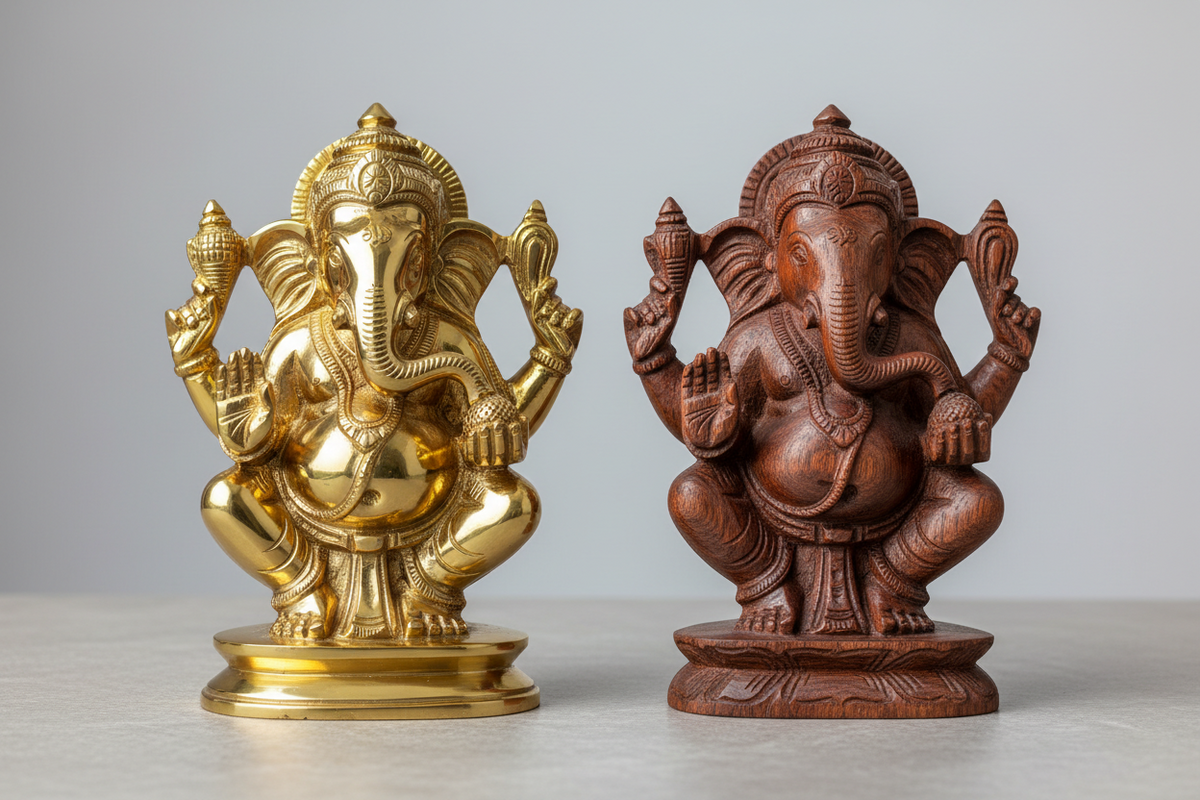
Short answer: choose brass if the idol will be actively worshipped — abhishek, tilak, daily aarti — because it tolerates water, oils and cleaning indefinitely. Choose wood if the piece is for display, if you want warmth rather than shine, or if it needs to suit a modern interior where a metal murti would feel too devotional.
Neither is the more authentic material. They answer different questions.
Why brass became the ritual metal
The reasons are practical as much as devotional, which is worth knowing because it makes the choice easier.
Brass is dense, so even a 3-inch idol has enough weight to sit stable during abhishek. It takes fine casting detail, which is why traditional murtis show crisp features. And critically, it withstands being washed in milk, water, kumkum and turmeric without degrading — the exact conditions a worshipped idol lives in.
Copper, being softer and more reactive, needs polishing aggressive enough to erode a deity's features over decades. Brass is the compromise that lasts generations, which is why it dominates temple sanctums and home mandirs alike.
What brass asks of you
It darkens. Copper reacts with air and moisture to form a surface oxide, accelerated by kumkum, ghee and handling. This is patina, not damage — the metal underneath is untouched, and a lemon-and-salt or tamarind clean brings it back whenever you want. Some households polish before every festival; others let it deepen for years. Both are legitimate.
What wood offers instead
Carved wood behaves completely differently in a room. It reads warm and organic rather than reflective, which is why it sits comfortably in living rooms, studies and bedrooms where brass can look ceremonial.
Hand carving also allows detail that casting cannot: the pierced jali latticework on our carved owl figurines or the layered depth of a Buddha bust with halo are carved from a single block, and no two are identical.
Wood is also considerably lighter, which matters more than people expect — for a wall shelf, a high mantel, or anything being couriered as a gift.
What wood asks of you
Keep it dry. Wood cannot be bathed, and hand-painted finishes lift with water. Dry dusting is the whole maintenance routine, plus an occasional drop of wood oil on natural finishes to deepen the sheen. Keep carved pieces out of prolonged direct sunlight, which fades paint and can dry the grain.
Choose by use, not by price
A short decision guide:
- Daily pooja, abhishek, tilak — brass, without hesitation.
- Home mandir, dry worship only — either works; brass ages better over decades.
- Living room, study, bedroom décor — wood, usually. It reads as art rather than altar.
- Gifting by courier — wood travels lighter; brass survives rougher handling. Both are fine, but a large brass piece costs more to ship and lands heavier in the recipient's hands (which some people like).
- Car dashboard or office desk — small brass for durability, or a light carved piece if weight matters.
What about antique-finish pieces?
Antique or ivory-finish idols occupy a middle ground: the visual weight of aged metal or stone, applied as a deliberate surface finish. They look striking on shelves and consoles, and they are popular as statement gifts.
The important caveat: that finish is the product. Lemon, tamarind and metal polish strip it rather than clean it, and it cannot be bathed. Treat antique-finish pieces like wood — dry dusting only — and they hold their look indefinitely.
On weight and hollow casting
Brass is dense, and weight climbs fast with size — the thing most often underestimated when ordering online. A 7-inch solid brass idol is substantially heavier than the same form in wood, which matters for wall shelves and car dashboards.
Hollow casting on larger brass pieces is standard practice, not a defect. It keeps big pieces manageable without affecting finish or detail.
The honest summary
If it will be worshipped, buy brass. If it will be looked at, buy whichever material you find beautiful — that is a legitimate reason on its own, and both are made by the same artisan families using techniques passed down generations.
Browse brass idols or the full god idols and figurines range, and see our brass cleaning guide before your first polish.
Share:
Where to Keep a Lakshmi Idol at Home for Prosperity
Vastu Items for the Home Entrance: What to Place and Where